Vatican Museums & Sistine Chapel Entrance Ticket
A popular choice for visiting the Vatican Museums and Sistine Chapel. Compare available times, ticket conditions and current pricing before booking.
Compare popular Sistine Chapel tickets, Vatican Museums entry options and guided tours. Check what is included, how long each visit takes and whether St. Peter’s Basilica is included before choosing your ticket.
A popular choice for visiting the Vatican Museums and Sistine Chapel. Compare available times, ticket conditions and current pricing before booking.
Sistine Chapel Tickets is an independent visitor guide and is not the official Vatican Museums or Sistine Chapel website. Some links are affiliate links, which means we may earn a commission at no extra cost to you. We compare ticket types, tour formats and inclusions to help you plan your visit.
Compare Sistine Chapel tickets and guided tours by starting price, traveller feedback and basilica coverage. These six options appear in descending review order.
1
Most reviewed
★★★★★ 4.68 · 18,245 reviews
Choose this tour if you want basilica coverage alongside the museums and chapel. It has the most reviews among these six options.
2
Entry ticket
★★★★★ 4.43 · 18,089 reviews
This skip-the-line ticket has more traveller reviews than the other entry options shown. Consider it if feedback matters more than the lowest starting price.
3
Fast-track ticket
★★★★★ 4.22 · 13,164 reviews
This fast-track option starts below the skip-the-line ticket above and has fewer reviews. Compare their booking details if you are weighing price against traveller feedback.
4
Fast-track ticket
★★★★★ 4.23 · 8,847 reviews
The lower starting price distinguishes this from the other fast-track ticket shown. It suits price-focused comparisons, with a similar rating but fewer reviews.
5
Priority entry
★★★★★ 4.36 · 5,013 reviews
Start here if your budget leads the decision: this has the lowest supplied starting price among these six. The ticket lists priority entry.
6
Entry experience
★★★★★ 4.29 · 861 reviews
Consider this as another entry option, but its title does not specify fast-track access. Check the selected option before comparing it with priority tickets.
Compare Sistine Chapel tickets and guided tours by price, feedback and listed access. The tour adds basilica coverage; entry options differ in access labels, starting prices and review counts.
| Option | From | Rating | Reviews | Format | Includes | Best for |
|---|---|---|---|---|---|---|
| Rome: Vatican Museums, Sistine Chapel & Basilica TourHighest rating and most reviews among these six options. | EUR 64 | 4.68 | 18,245 | Guided tour | Vatican Museums, Sistine Chapel and basilica tour | Visitors wanting basilica coverage alongside a guided museum and chapel visit. |
| Vatican Museums & Sistine Chapel Skip-the-Line Entry TicketMore reviews than the other entry tickets, but a higher starting price. | EUR 49 | 4.43 | 18,089 | Skip-the-line entry | Skip-the-line entry to the museums and chapel | Travellers prioritising the largest review count among these entry options. |
| Rome: Vatican Museums & Sistine Chapel Fast-Track TicketMore reviews than the cheaper fast-track option, with a similar rating. | EUR 45 | 4.22 | 13,164 | Fast-track entry | Fast-track entry to the museums and chapel | Travellers comparing fast-track tickets who favour more reviews over a lower price. |
| Rome: Vatican Museums & Sistine Chapel Fast-track TicketLower starting price than the other fast-track ticket shown. | EUR 36 | 4.23 | 8,847 | Fast-track entry | Fast-track entry to the museums and chapel | Visitors seeking the lower-priced fast-track option and accepting fewer traveller reviews. |
| Vatican Museums & Sistine Chapel: Priority Entry TicketLowest starting price here, with fewer reviews than both fast-track tickets. | EUR 35 | 4.36 | 5,013 | Priority entry | Priority entry to the museums and chapel | Travellers choosing mainly by starting price who also want priority entry. |
| Rome: Vatican Museums & Sistine Chapel Entry ExperiencesThe title does not specify priority or fast-track access. | EUR 43 | 4.29 | 861 | Entry experience | Museums and chapel entry; check option details | Visitors comparing another entry option without assuming it includes fast-track access. |
Sistine Chapel tickets and guided tours differ in access, basilica coverage and price. Answer four questions to narrow these six options. Check duration and time slots at booking.
Compare listed access, visit scope, format and traveller feedback.
A request for a guide or basilica coverage takes priority over price and entry labels.
For Sistine Chapel tickets and guided tours, check arrival instructions, queue wording, visitor rules and audio setup. These details help you understand what to expect beyond the booking title.
Use your voucher’s location, not just the chapel’s map pin
A search for the attraction does not confirm where your booking starts.
Fix: Open your final voucher and save its meeting address and arrival instructions. Check whether you must meet a host or collect a ticket before entry. Ask the provider about any conflicting locations.
Check what “skip-the-line” covers before planning a tight schedule
An access label alone does not explain which queues your booking covers.
Fix: Read the waiting-time and entry notes for your selected option. Ask which queues remain and whether the booked time means check-in or entry. Avoid scheduling your next activity around an assumed immediate start.
Check clothing and bag rules before leaving your hotel
Your booking confirmation is not a substitute for checking current visitor rules.
Fix: Read the Vatican Museums’ official visitor guidance for dress requirements and restricted items. Check your planned outfit and bag against those rules. Confirm storage arrangements before bringing anything you cannot carry inside.
Check how any included audio works before you arrive
If your option lists audio, confirm the format and setup instructions.
Fix: Check whether you collect a device or use your own phone. For phone-based audio, follow the download instructions before leaving. Confirm the language, headphone requirements and any access code in your booking.
Planning a Sistine Chapel visit involves more than choosing a ticket. The chapel is reached through the Vatican Museums, so opening hours, security screening, clothing rules, baggage restrictions and museum facilities all affect your visit. Use the practical information below to plan your arrival, understand what you can bring and avoid common problems at the entrance.
The Sistine Chapel follows the Vatican Museums schedule, with normal opening from 8:00 AM to 8:00 PM Monday to Saturday.
For 2026, the Vatican Museums are normally open Monday to Saturday from 8:00 AM until 8:00 PM, with final admission at 6:00 PM. Visitors are required to begin leaving the exhibition galleries approximately 30 minutes before museum closing.
On the last Sunday of most months, the Museums normally open from 9:00 AM to 2:00 PM, with final admission at 12:30 PM. Entry on these Sundays is free, which can also make them significantly busier than a normal ticketed day.
The Museums close on most other Sundays and on several Vatican and public holidays. The official 2026 calendar lists closures including 1 and 6 January, 11 February, 19 March, 6 April, 1 May, 29 June, 14 and 15 August, 1 November, 8 December and 25–26 December.
Your booked entry time is therefore important. A 6:00 PM final admission does not mean you have until 8:00 PM to arrive, and late entry leaves substantially less time for the Vatican Museums before reaching the Sistine Chapel.
Visitors enter through the Vatican Museums on Viale Vaticano rather than entering the Sistine Chapel directly from St. Peter’s Square.
The visitor entrance for the Vatican Museums is on Viale Vaticano, 00165 Rome. The Sistine Chapel is part of the museum itinerary, so visitors normally enter through the Vatican Museums rather than through St. Peter’s Basilica.
By Rome Metro Line A, the official Vatican Museums guidance recommends Ottaviano or Cipro stations when travelling in the direction of Battistini. From either station, continue on foot toward the museum entrance.
Useful public-transport options listed by the Vatican Museums include bus 49, which stops in the square in front of the Museums; buses 32, 81 and 982 to Piazza del Risorgimento; buses 492 and 990 to Via Leone IV / Via degli Scipioni; and tram 19 to Piazza del Risorgimento.
There is also an official taxi rank in the square outside the Vatican Museums. If you have a timed ticket or guided-tour meeting point, plan to arrive early enough for the final walk, ticket checks and airport-style security screening.
Visitors must dress appropriately for the Vatican Museums and Sistine Chapel, with shoulders and knees suitably covered.
The Vatican Museums apply a dress standard because the Sistine Chapel and other parts of Vatican City are religious spaces. Official visitor guidance states that sleeveless or low-cut clothing, shorts above the knee, miniskirts and hats are not permitted.
A practical choice is clothing that covers both the shoulders and knees throughout the visit. This is particularly important in summer, when visitors may otherwise arrive in clothing suitable for Rome’s heat but not accepted inside Vatican religious sites.
The Vatican also reserves the right to refuse entry where visible clothing, signs or personal imagery are considered offensive to Catholic religion, morality or common decency.
Do not rely on being able to solve the problem at the entrance. If you are visiting during hot weather, a lightweight layer or scarf can make it easier to remain appropriately dressed while still staying comfortable outside.
All visitors pass through security, and oversized bags or restricted items may need to be deposited in the free cloakroom.
Visitors entering the Vatican Museums pass through a metal-detector security check. Large luggage, suitcases, oversized backpacks, packages and containers considered unsuitable by staff must be left in the museum cloakroom before entering the exhibition areas.
The Vatican Museums’ cloakroom is free of charge and is located after the security checkpoint. Items such as medium or large umbrellas, non-telescopic umbrellas, tripods, photographic stands, banners, signs and certain equipment must also be deposited.
Knives, scissors and various metal tools are required to be stored in the cloakroom. Firearms and hazardous materials are prohibited entirely and cannot be deposited there.
There is an important planning detail if your itinerary continues toward St. Peter’s Basilica: Vatican Museums guidance specifically advises visitors continuing to the Basilica not to leave baggage in the Museums, because collecting stored items may require returning toward the museum exit.
Photography is allowed in many Vatican Museum areas, but photography and filming are prohibited inside the Sistine Chapel.
The Sistine Chapel has stricter rules than most of the Vatican Museums. According to official Vatican visitor guidance, photography and filming are forbidden inside the Sistine Chapel, including images taken with mobile phones, cameras or other electronic equipment.
Museum staff may require photographs or video recorded in violation of this rule to be deleted in their presence.
Elsewhere in the Vatican Museums, personal photography is generally permitted, but flash photography is prohibited. Tripods, photographic stands, drones, professional equipment and telescopic selfie sticks are also prohibited unless specific authorisation has been obtained.
The Sistine Chapel is also a sacred space, and visitors are requested to maintain absolute silence. Guided groups therefore normally receive their detailed explanation of Michelangelo’s frescoes before entering the chapel rather than while standing inside it.
The official Vatican Museums audio guide includes more than 400 commentaries and can be used to build your own route.
Independent visitors who want more context without joining a guided tour can use the official Vatican Museums audioguide. The Vatican describes it as an MP3-based guide containing more than 400 audio commentaries in 12 languages and over three hours of material.
Because the content is divided by artworks and museum areas, you do not have to listen to the entire recording. It can be adapted to the amount of time available and to the collections you are most interested in seeing.
The official audioguide can be hired at the Museums and may also be reserved through the Vatican Museums’ ticketing system when available with your booking.
For a self-guided visit, download or save the official Vatican Museums map before entering. The complex contains multiple collections and long connecting galleries, so identifying your priorities before arrival can prevent spending most of your time navigating rather than viewing them.
Restrooms, refreshment areas and designated places to sit are available along the museum route.
Restrooms are located at multiple points along the Vatican Museums itinerary and are signposted inside the complex. The official museum map also identifies accessible toilets, baby-changing facilities and nursing areas.
Food and drinks cannot be consumed inside the exhibition galleries. However, the Museums provide vending machines and refreshment areas, including cafeteria, self-service and pizzeria facilities along the visitor route.
Food or drink carried into the Museums may need to be left in the free cloakroom and collected before closing. Alcoholic and high-alcohol beverages are not permitted inside the museum itinerary.
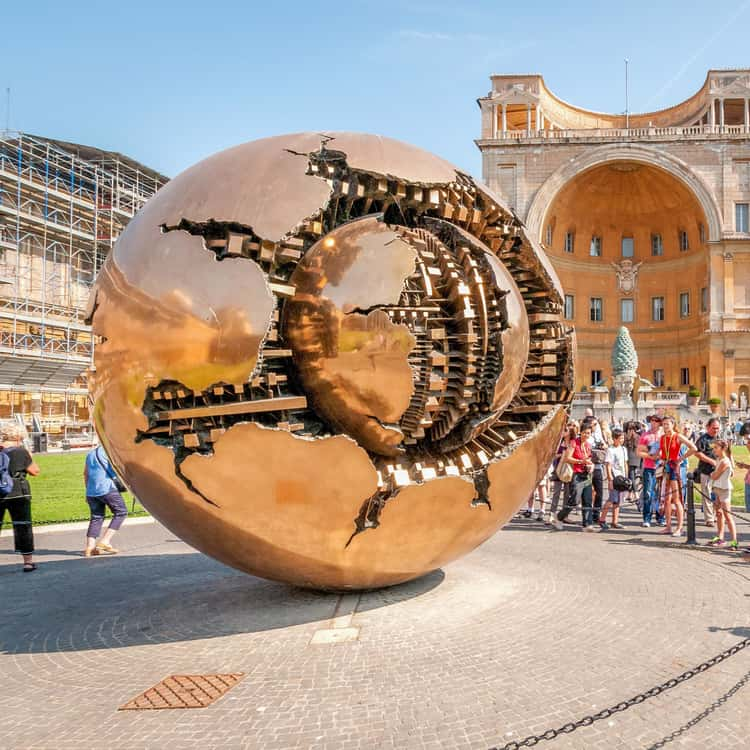
Visitors who need a break can use designated seating and relaxation areas, including the Courtyard of the Cuirasses, Courtyard of the Pinacoteca, Square Garden and Courtyard of the Pinecone.
This is useful when planning a longer visit because walking through the Museums to the Sistine Chapel can involve considerably more standing and walking than visitors expect from looking at a map alone.
Most Vatican Museum spaces are accessible, with wheelchair support, accessible facilities and assistance for families.
Most Vatican Museums spaces can be visited by people with reduced mobility, although some sections have architectural limitations. The Museums provide a dedicated barrier-free itinerary designed to reach major visitor services and important areas with assistance from museum staff where necessary.
Visitors with mobility difficulties can request a wheelchair free of charge from the cloakroom, subject to availability. A valid identity document and deposit are required.
Visitors with certified disability of at least 67% are currently eligible for free admission under Vatican Museums rules. Where the visitor is not self-sufficient, free admission also extends to one companion. These tickets are issued at the appropriate desk after presentation of qualifying documentation rather than booked through the normal online system.
Families may bring strollers, and museum staff can direct visitors toward suitable elevators and easier routes. Baby-changing areas and nursing facilities are available at points along the museum itinerary, with highchairs available in some refreshment areas.
Allow enough time for security, the museum route and the chapel rather than treating the Sistine Chapel as a quick standalone stop.
The Sistine Chapel is located near the end of a substantial Vatican Museums visitor route, so planning it as a short standalone attraction can create unrealistic timing expectations.
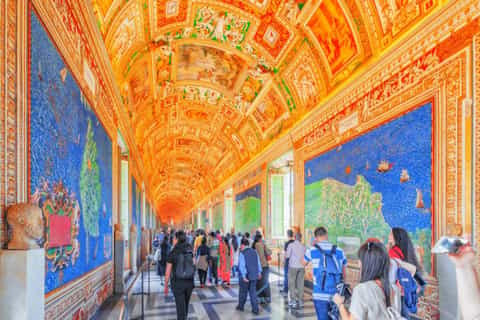
A focused visit can concentrate on the major galleries and the chapel, while visitors interested in classical sculpture, Raphael’s Rooms, the Gallery of Maps, tapestries and other collections can easily spend substantially longer inside.
Your actual visit time should also include security screening, walking between galleries, toilet or refreshment stops and possible congestion. During busy periods, movement through popular rooms can take longer than expected.
Avoid scheduling another timed Rome attraction immediately after your Vatican visit. A comfortable buffer is particularly useful if you also intend to walk toward St. Peter’s Square, have a meal nearby or collect anything from the cloakroom.
Early entry can give you more usable museum time, while late bookings require closer attention to the 6:00 PM final-admission limit.
There is no guaranteed crowd-free time inside the Sistine Chapel, because visitor numbers vary with season, holidays, group schedules and special Vatican events. However, booking earlier in the day gives you the greatest flexibility if you want to explore more of the Museums before reaching the chapel.
Later entry can work well for visitors who prefer a more concentrated itinerary, but remember that normal final admission is currently 6:00 PM and visitors begin leaving galleries before the 8:00 PM museum closing time.
The last Sunday of the month can be attractive because normal museum admission is free, but the combination of free entry and reduced Sunday opening hours can produce substantial demand.
If seeing particular collections matters to you, choose your entry time based on the entire Vatican Museums itinerary rather than trying to identify a single universally “quietest” hour.
The Sistine Chapel tells its story across the walls as well as overhead. Michelangelo’s ceiling belongs to a larger arrangement linking Creation, Moses, Christ and the Last Judgment. Looking only upward means missing how those parts connect.
The ceiling shows humanity’s beginnings; the altar wall shows its judgment, while the side walls connect Moses and Christ.
Before Michelangelo painted the ceiling, artists including Botticelli, Perugino and Ghirlandaio decorated the walls. Scenes from Moses’s life face episodes from Christ’s life, inviting comparisons between the two.
Look for Perugino’s Delivery of the Keys, where Christ gives Saint Peter the keys. The subject connects the biblical story to papal authority, making it especially meaningful in a chapel used for papal elections.
Michelangelo placed stories from Genesis along the ceiling’s centre, from Creation to Noah. The Creation of Adam is one part of this sequence, not a separate picture.
Around these scenes sit prophets and sibyls, female seers from classical antiquity. Their placement brings biblical prophecy and ancient traditions into a Christian account of salvation.
Notice the painted frames and ledges around them. This imaginary architecture divides the curved surface into readable groups, giving the figures the presence of sculpture.
Michelangelo painted the Last Judgment later than the ceiling. Instead of separate framed episodes, bodies gather around Christ in a vast, connected composition.
Follow the rising figures on the left and the falling figures on the right. Their movement turns Christian ideas about salvation and condemnation into a visible drama.
Compare the paired wall stories, the ceiling’s framed scenes and the altar wall’s sweeping movement. Their different arrangements shape how you follow each story. The chapel becomes easier to understand when you connect its surfaces rather than search only for famous details.
No. Standard Vatican Museums admission includes the Sistine Chapel on the same day, so you do not need to buy a separate Chapel ticket.
Listings called “Sistine Chapel tickets” are normally Vatican Museums admission or tours that include the Chapel as part of the museum visit.
No. The Sistine Chapel is reached as part of the Vatican Museums visitor route and does not have a separate public tourist entrance.
You do not have to spend equal time in every gallery, but you still enter through the Museums and follow the visitor route towards the Chapel.
No. Photography and video recording are prohibited inside the Sistine Chapel, including with mobile phones and other electronic devices.
Photography for personal use is generally allowed elsewhere in the Vatican Museums without flash, but the Chapel is a specific exception to that rule.
The Sistine Chapel is a sacred space where visitors are asked to remain silent. Guided groups receive the main explanation before entering rather than during the Chapel visit.
Use that explanation to know what to look for before you enter, especially Michelangelo’s ceiling and the Last Judgment behind the altar.
No. Mobile-phone use is prohibited inside the Sistine Chapel, and your phone should already be on silent while visiting the Vatican Museums.
Do not rely on your phone for notes, photography or an audio explanation once you enter the Chapel. Review anything you need beforehand.
Entry requires appropriate clothing. Sleeveless or low-cut clothing, shorts above the knee, miniskirts and hats are not permitted under the Vatican Museums dress rules.
The rule applies to the Sistine Chapel as well as the wider Vatican Museums, so dress appropriately before reaching the entrance rather than expecting to correct it inside.
Yes. Large luggage, suitcases and bags considered unsuitable for the galleries must be left in the free Vatican Museums cloakroom after security.
If you plan to continue towards St. Peter’s Basilica, avoid leaving belongings there unless you are prepared to return to the museum exit to collect them.
Children under 7 currently qualify for free admission to the Vatican Museums and Sistine Chapel. Children aged 7 to 18 qualify for the reduced admission category.
For reduced tickets, make sure the visitor meets the eligibility rules and carry any documentation required to prove the reduction.